
How Often Should You Service Your Ducted Air Conditioner?
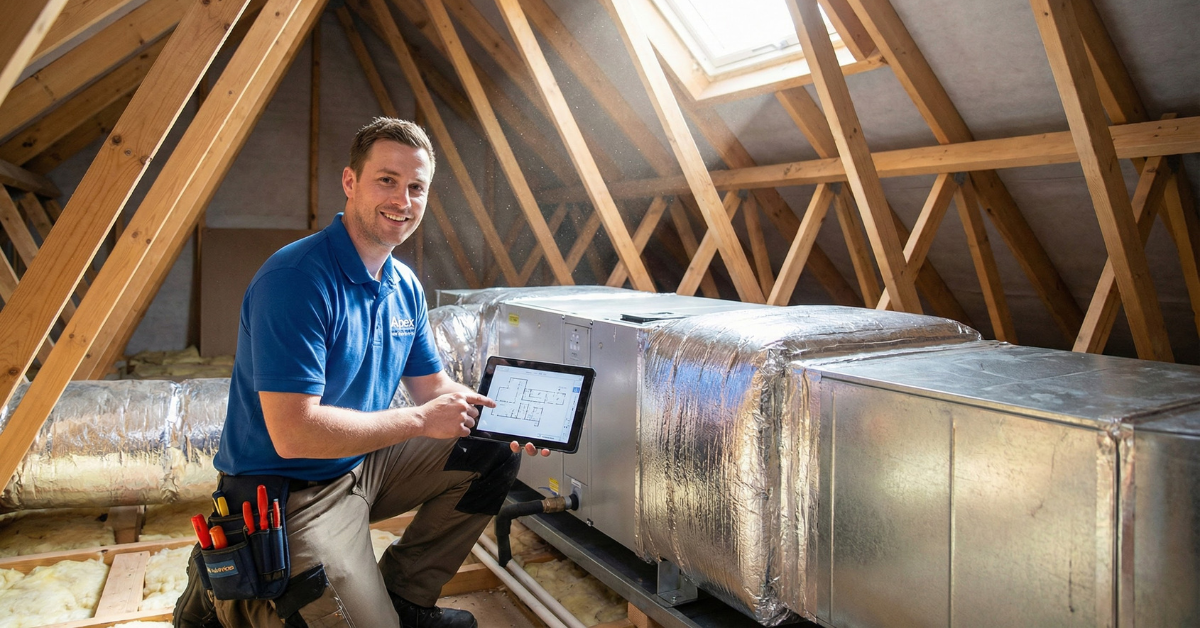
Imagine driving your car every single day for a year through scorching heat, dusty winds, and humid storms without ever changing the oil or checking the tires. You probably wouldn’t expect it to run smoothly for very long. Yet, many homeowners treat their cooling systems exactly this way. We often take our climate control for granted, pressing a button and expecting instant comfort, forgetting that complex machinery is working hard behind the scenes.
If you have invested in a whole-home cooling solution, you likely want to protect that investment. One of the most common questions homeowners ask is: how often should you service your ducted air conditioner?
The short answer is generally once a year. However, like most things in life, the nuanced answer depends on how you use it, where you live, and the specific type of system you own. Ignoring this schedule doesn’t just risk a breakdown on the hottest day of the year; it can also silently inflate your electricity bills and degrade the air quality in your home.
In this guide, we will break down the ideal maintenance schedule, what actually happens during a service, and the warning signs that suggest you need to call a professional immediately.
The General Rule of Thumb: Annual Maintenance
For the vast majority of households, a professional service once every 12 months is the gold standard. Manufacturers and HVAC experts agree that an annual check-up is sufficient to keep the warranty valid and the system running efficiently.
The best time to schedule this is usually in the spring. By booking your service before the summer peak hits, you ensure your system is ready to handle the intense workload of the coming months. There is nothing worse than turning on your cooling for the first time in December or July (depending on your hemisphere) only to find it blowing warm air.
If you have a reverse-cycle system that you use for both heating in winter and cooling in summer, the recommendation often changes. Because these units are working year-round, the wear and tear is significantly higher. In this case, many experts recommend a service every six months once in spring and once in autumn to ensure the ducted air system transitions smoothly between seasons.
The DIY Component: What You Can Do Yourself
While a full service requires a licensed technician, there is one critical task you should be doing yourself: cleaning the filters.
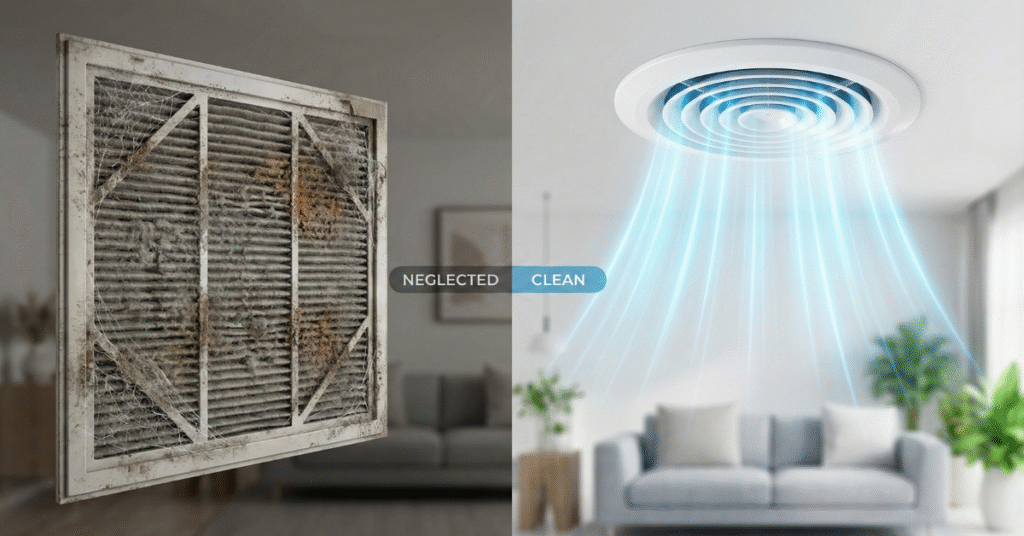
Your return air filter is the first line of defense. It traps dust, pet dander, and pollen before they can enter the main unit. If this filter is clogged, airflow is restricted, and the system can freeze up or overheat.
You should check your filters every 3 to 6 months. If you have pets that shed or live in a dusty area, you might need to check them monthly. Most filters can be simply vacuumed or washed with a garden hose and dried before being put back. This simple act is the single most effective way to maintain healthy ducted air flow between professional services.
Why “Set and Forget” is a Costly Mistake
It is easy to skip a service when everything seems to be working fine. However, a decline in performance is often slow and invisible. Dust accumulates on coils, refrigerant levels drop slightly, and moving parts lose lubrication.
A neglected system has to work much harder to achieve the same result. This means your compressor runs longer and hotter, using more electricity. Studies show that a system that has missed routine maintenance can lose up to 5% of its efficiency every year. Over five years, that is a massive drop in performance that you are paying for directly via your monthly energy bills.
Furthermore, ducted air systems rely on a complex network of tubes running through your ceiling or floor. If these ducts develop leaks or blockages, you might be paying to cool your roof cavity rather than your living room.
What Happens During a Professional Service?
You might wonder what you are actually paying for when a technician arrives. A comprehensive service is far more than just cleaning a filter. It involves a multi-point inspection of the entire mechanical and electrical system.
Here is a typical checklist of what a professional will do:
- Check Refrigerant Levels: They will measure the gas pressure. If it is low, there is likely a leak that needs repairing. Low gas levels are a leading cause of compressor failure.
- Clean the Coils: The evaporator and condenser coils transfer heat. If they are dirty, they can’t do their job. Chemical cleaning of these coils restores efficiency.
- Inspect the Ductwork: They will look for tears, crushed sections, or animal intrusion in the roof space. Ensuring the integrity of the ducted air network is vital for efficiency.
- Clear Drains: They will flush the condensate drain line to prevent water damage and mold growth.
- Test Electronics: Tightening electrical connections, testing the thermostat accuracy, and checking the PC board functions.
- Check Zoning: Ensuring all zone motors open and close correctly so you aren’t cooling empty rooms.
5 Signs You Need an Immediate Service
Sometimes, waiting for the annual check-up isn’t an option. Your system will often tell you when it is struggling. Here are five clear signs that you need to book a technician right away:
1. Weak Airflow
If you put your hand up to a vent and the air feels like a weak whisper rather than a strong breeze, something is wrong. This could be a clogged filter, a failing fan motor, or a crushed duct in the ceiling.
2. Strange Noises
Your system should be relatively quiet (a soft hum). If you hear grinding, squealing, rattling, or banging, turn the system off immediately. These sounds usually indicate a mechanical part has come loose or a motor is failing. Continuing to run the system could cause catastrophic damage.
3. Unpleasant Smells
A musty or “wet sock” smell often indicates mold or mildew growing inside the condensate drain or the ductwork itself. A burning smell suggests an electrical fault. Both require professional attention to ensure your ducted air quality remains safe for your family.
4. Spiking Energy Bills
If your usage habits haven’t changed but your electricity bill has jumped significantly, your air conditioner is the likely culprit. It is consuming more power to do the same job, which is a hallmark of a system in desperate need of a tune-up.
5. Uneven Cooling
Are the bedrooms freezing while the kitchen remains hot? This could be an issue with the zone motors (the dampers that control airflow to different rooms) or a refrigerant leak. A technician can balance the system to ensure every room is comfortable.

The Hidden Benefit: Health and Hygiene
Beyond comfort and cost, servicing is about health. Your cooling system circulates the air you breathe. In a neglected system, the moist environment inside the indoor unit can become a breeding ground for bacteria and mold.
When the fan turns on, these spores are blown through the vents and into your lungs. For families with asthma or allergy sufferers, a dirty ducted air conditioner can be a major trigger. Regular professional cleaning ensures that the air circulating through your home is not just cool, but clean and hygienic.
Do New Systems Need Servicing?
A common misconception is that brand-new systems don’t need maintenance for the first few years. This is incorrect. In fact, most manufacturers require proof of regular maintenance to honor the warranty.
If a part fails three years into a five-year warranty, the manufacturer may ask for service records. If you cannot prove the system was maintained, they may void the warranty, leaving you with a hefty repair bill. Treat your new AC like a new car; the first few services are crucial for long-term reliability.
Conclusion
So, how often should you service your ducted air conditioner? Aim for once a year at a minimum, ideally in spring. If you rely on it for heating as well, bump that up to twice a year.
It is easy to view maintenance as an annoying expense, but it is actually a saving. The cost of a service is far lower than the cost of replacing a compressor or paying inflated energy bills for years. By staying proactive, you ensure your ducted air system runs quietly, efficiently, and hygienically for a decade or more.
Don’t wait for the rattle or the heatwave. Check your calendar, look at your last service date, and if it has been over 12 months, pick up the phone. Your future self (and your wallet) will thank you.
FAQ
- why ducted air care matters
- ensure the ducted air system transitions are
- maintain healthy ducted air flow system
- ensure your ducted air quality system transitions are
- integrity of the ducted air network system
- dirty ducted air conditioning cleaning
- ensure your ducted air system runs out
- specific type of ducted air system failure
- complex ducted air systems rely on failure
- comfortable ducted air environmental problems
Wow nice one