
Air conditioners are no longer a luxury in Saudi Arabia, they are a daily necessity. During the hot summer months, your AC system works almost nonstop to keep your home or office comfortable. But like any machine, an air conditioner can develop problems over time and AC not cooling Sometimes the signs are obvious, while other times they are easy to ignore until the issue becomes serious and expensive.
Many homeowners wait too long before calling an HVAC technician. They assume the system will start working properly again or believe the issue is minor. Unfortunately, delaying repairs can increase electricity bills, reduce cooling performance, and even damage the entire HVAC system.
Understanding the early warning signs of AC problems can save you time, money, and stress. In this guide, we will explain the most common signs your air conditioner needs repair, why these problems happen, and what you can do to keep your system running efficiently.
Why My AC Not Cooling Properly
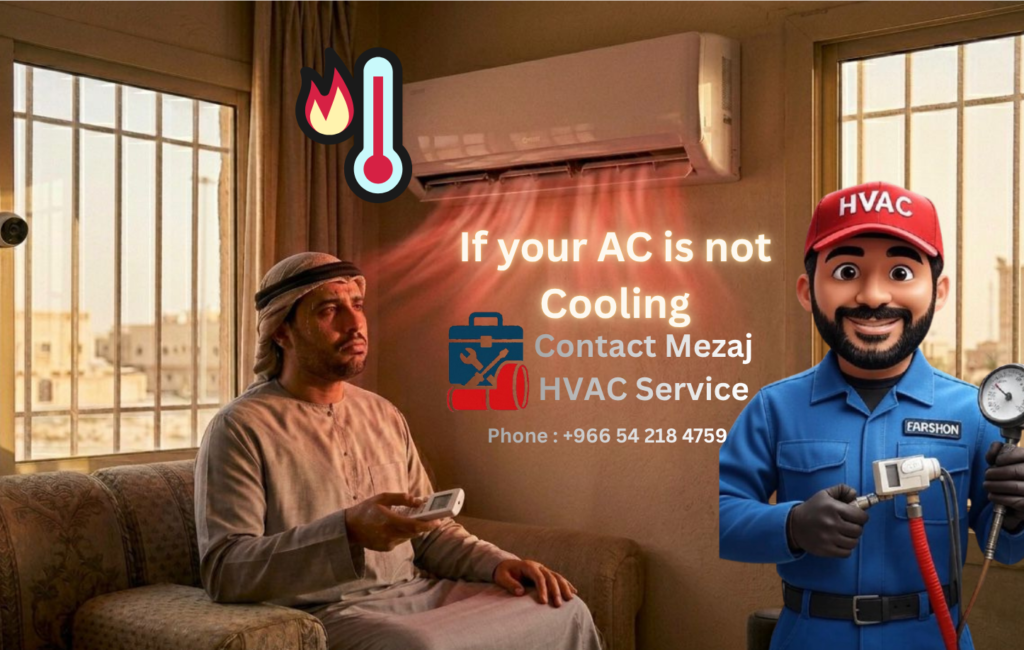
One of the most common questions homeowners ask is, “Why is my AC not cooling properly?” This is also one of the biggest signs that your HVAC system may need professional repair.
An air conditioner that runs continuously but fails to cool the room properly usually indicates an underlying issue. In Saudi Arabia’s extreme climate, even a small cooling problem can quickly make indoor spaces uncomfortable.
Dirty Air Filters
Air filters collect dust, dirt, and airborne particles. Over time your ac not cooling, they become clogged and restrict airflow. When airflow is blocked, your AC system struggles to distribute cool air efficiently.
Signs of Dirty Filters
- Weak airflow from vents
- Increased dust indoors
- Higher electricity bills
- Uneven room temperatures
Replacing or cleaning air filters regularly can improve cooling performance and extend the life of your HVAC system.
Refrigerant Problems
Low refrigerant levels are another major reason your AC not cooling, may stop cooling effectively. Refrigerant is essential for removing heat from indoor air.
If your system has a refrigerant leak, you may notice:
- Warm air coming from vents
- Ice buildup on AC pipes
- Hissing sounds
- Longer cooling cycles
A licensed HVAC technician should inspect and repair refrigerant leaks immediately.
Thermostat Malfunctions
Sometimes the issue is not the AC unit itself but the thermostat. Incorrect settings or faulty sensors can make your ac not cooling cause and your cooling problems.
Modern smart thermostats can improve efficiency and maintain consistent indoor temperatures.
Common Air Conditioner Problems
Every HVAC system experiences wear and tear over time. Some issues are minor, while others can lead to complete system failure if ignored and make your ac not cooling.
AC Making Strange Noises
An air conditioner should operate relatively quietly. Unusual sounds are often early warning signs of mechanical issues.
Common AC Sounds and Their Meaning
- Banging: Loose or broken components
- Grinding: Motor problems
- Hissing: Refrigerant leak
- Clicking: Electrical issues
- Squealing: Belt or fan problems
Ignoring strange noises can lead to more expensive repairs later.
Water Leaks Around the Unit
Water leaks are another common HVAC issue. Moisture around your indoor AC not cooling unit may indicate:
- A clogged drain line
- Frozen evaporator coils
- Broken condensate pump
Water leaks can damage walls, ceilings, and flooring if left untreated.
Bad Odors from the AC
Unpleasant smells coming from your vents should never be ignored.
Common AC Odors
- Musty smell: Mold or mildew
- Burning smell: Electrical problem
- Rotten smell: Bacteria buildup
Professional duct cleaning and AC maintenance can help eliminate odors and improve indoor air quality.
Signs Your Air Conditioner Needs Immediate Repair
Some AC problems require urgent attention. Delaying service can cause system failure during extreme summer temperatures.
Weak Airflow
Poor airflow is one of the clearest signs of HVAC trouble.
Possible causes include:
- Blocked air ducts
- Dirty filters
- Failing blower motor
- Frozen evaporator coil
Weak airflow forces your AC system to work harder, increasing energy consumption.
AC Constantly Turning On and Off
Short cycling happens when your air conditioner repeatedly starts and stops.
This issue may result from:
- Dirty condenser coils
- Incorrect thermostat placement
- Refrigerant issues
- Oversized HVAC system
Short cycling reduces energy efficiency and puts stress on system components.
Rising Electricity Bills
Sometimes your AC not cooling but continuously turn on, If your energy bills suddenly increase without a change in usage, your AC system may be losing efficiency.
Older HVAC systems often consume more electricity due to:
- Worn-out components
- Poor airflow
- Dirty coils
- Aging compressors
Routine HVAC maintenance helps reduce electricity costs and improve performance.
Importance of Regular AC Maintenance
Preventive maintenance is one of the best ways to avoid costly repairs.
Many homeowners only call HVAC technicians after their system stops working completely. However, regular inspections can identify problems before they become serious.
Benefits of Professional AC Maintenance
Improved Energy Efficiency
A well-maintained HVAC system consumes less electricity and cools more effectively.
Longer Equipment Lifespan
Routine servicing reduces wear and tear on important components.
Better Indoor Air Quality
Clean filters and ducts improve air circulation and reduce allergens.
Fewer Emergency Repairs
Regular inspections help detect issues early.
How Dirty Ducts Affect Indoor Air Quality
Many people focus only on the AC unit itself and forget about the duct system. Dirty air ducts can reduce your ac cooling performance and negatively affect indoor air quality.
Dust, debris, mold, and allergens can accumulate inside ducts over time.
Signs Your Air Ducts Need Cleaning
- Excess dust around vents
- Allergy symptoms indoors
- Uneven cooling
- Musty odors
- Reduced airflow
Professional duct cleaning improves airflow and helps your HVAC system operate efficiently.
Best Temperature Setting for AC in Summer
Setting the correct thermostat temperature can improve comfort while reducing electricity bills.
Experts generally recommend keeping indoor temperatures between 22°C and 24°C during summer.
Why Thermostat Settings Matter
Lowering the temperature excessively forces your HVAC system to run continuously to your ac not cooling properly.
This can lead to:
- Increased energy consumption
- Higher utility bills
- Faster wear on components
- Reduced system lifespan
Smart thermostat technology can help maintain optimal efficiency.
How to Reduce AC Electricity Bills
Electricity costs increase significantly during hot weather, especially when HVAC systems run all day.
Fortunately, there are several ways to improve efficiency and lower cooling costs.
Replace Air Filters Regularly
Dirty filters force your AC to work harder. Replacing filters every 1–3 months improves airflow and efficiency.
Schedule Professional HVAC Inspections
Regular maintenance helps identify issues before they increase energy usage.
Seal Air Leaks
Air leaks around doors and windows allow cool air to escape.
Proper insulation helps maintain indoor temperatures more effectively.
Clean the Outdoor Unit
Dust and debris around the outdoor condenser reduce heat transfer efficiency.
Keeping the area clean improves performance.
When to Replace Your Air Conditioner
Sometimes repairing an old HVAC system is no longer cost-effective.
If your air conditioner frequently breaks down or struggles to cool properly, replacement may be the better option.
Signs You Need a New AC System
Your AC Is More Than 10–15 Years Old
Older systems become less energy efficient over time.
Frequent Repairs
Constant repair costs can eventually exceed replacement costs.
Uneven Cooling
If some rooms are too hot while others are too cold, your system may be failing.
High Energy Bills
Modern energy-efficient HVAC systems can significantly reduce electricity usage.
Professional HVAC Repair Services in Saudi Arabia
Saudi Arabia’s extreme climate places heavy demands on air conditioning systems. Professional HVAC service is essential for maintaining reliable cooling performance.
Experienced technicians can diagnose issues quickly and recommend the best repair solutions.
Why Choose Professional HVAC Technicians?
Accurate Diagnosis
Professionals use specialized tools to identify problems correctly.
Safe Repairs
HVAC systems contain electrical components and refrigerants that require expert handling.
Long-Term Solutions
Professional repairs help prevent recurring problems.
Preventive Tips to Keep Your AC Running Efficiently
Simple maintenance habits can improve HVAC performance and reduce repair costs.
Keep Air Vents Clean
Blocked vents reduce airflow and strain the system.
Change Thermostat Batteries
Weak thermostat batteries can cause inaccurate temperature readings.
Keep Outdoor Units Clear
Remove debris, leaves, and dust around the condenser unit.
Schedule Seasonal Maintenance
Professional inspections before summer help prepare your system for heavy usage.
Conclusion
Your air conditioner plays a critical role in maintaining indoor comfort, especially in Saudi Arabia’s harsh climate. Ignoring small AC problems can quickly lead to expensive repairs, poor cooling performance, and higher electricity bills.
Understanding the warning signs — such as weak airflow, unusual noises, rising energy costs, water leaks, and poor cooling — can help you take action before the problem becomes serious.
Regular HVAC maintenance, professional inspections, and timely repairs are essential for keeping your system running efficiently throughout the year.
If your AC is not cooling properly or showing signs of trouble, contacting a professional HVAC technician early can save you money and extend the lifespan of your system.
Reliable air conditioning is not just about comfort — it is about creating a healthier and more energy-efficient indoor environment for your home or business.
Very helpfully post